
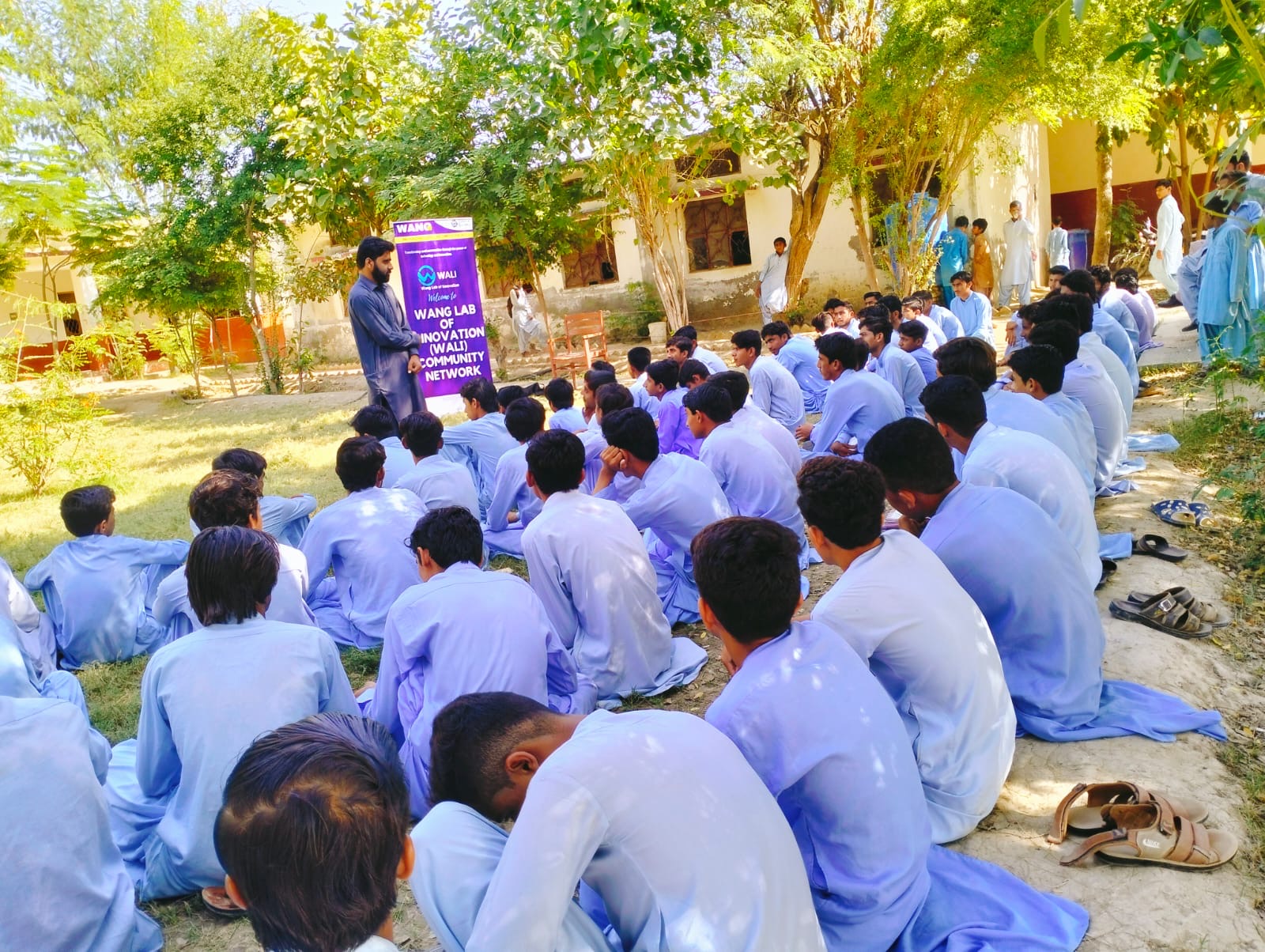
The digital divide in Balochistan shows up in ordinary ways: students cannot join online learning consistently, first-time learners do not have a nearby place to practice, teachers lack accessible training, and rural families have to manage opportunity through weak infrastructure. WALI exists because these conditions were visible long before they became popular topics online.
Its own public story keeps returning to the same trigger: COVID-19 exposed how hard it was for students in low-access areas to keep up when digital skills and reliable internet were missing. That is why WALI was built in Bela, not in a distant city. The response needed to be local.
What WALI’s record shows
By 2025, WALI had trained 196 learners through its core three-month digital literacy program, including 108 female learners. It had also run six Urdu AI workshops and a winter digital learning camp for children. The organizational profile adds another important detail: year-round camps serving around 40 students daily across two sessions.
Those are not provincial statistics, but they are useful local evidence. They show what the divide looks like when it meets a functioning response: repeated teaching, a physical site, internet access, and enough continuity to build confidence rather than one-time awareness.
Why access is more than connectivity
Connectivity matters, but it is not enough on its own. WALI’s ecosystem makes that clearer. Infrastructure and power support the lab. Digital literacy builds foundational skills. Urdu AI reduces language barriers. WIRE and the wider ecosystem broaden who gets to benefit from technology over time.
That is a more complete response than a page that only says rural areas need internet. Rural areas need usable learning conditions, familiar language, trusted facilitators, and strong enough local systems that people can keep returning.
Why this local record matters
The digital divide in Balochistan is often discussed in broad national terms. WALI shows what a local response looks like when it is documented through place, programs, and repeated delivery instead of general rhetoric.
It also gives partners a clearer frame for the institution: WALI is not only running programs. It is responding to a structural access problem with a layered rural model.