
WALI
WALI develops accessible learning pathways, technology products, training, consultancy, and partnership services.
About WALI
WANG Lab of Innovation (WALI) is an innovation-led social enterprise rooted in Lasbela and connected to the world. We remove barriers of access, technology, and language so local ability can reach wider learning, livelihoods, and markets.
Our model
WALI combines public benefit, practical innovation, and earned income. WANG contributes community trust and decades of experience delivering inclusive local programmes.
WALI develops accessible learning pathways, technology products, training, consultancy, and partnership services.
WANG brings long-term community relationships, inclusive programme delivery, and local accountability.
Training, consultancy, and product revenue help WALI sustain its work and reinvest in accessible, community-led innovation.
Funders, schools, researchers, enterprises, and startups can work with WALI through programmes, pilots, products, or field partnerships.
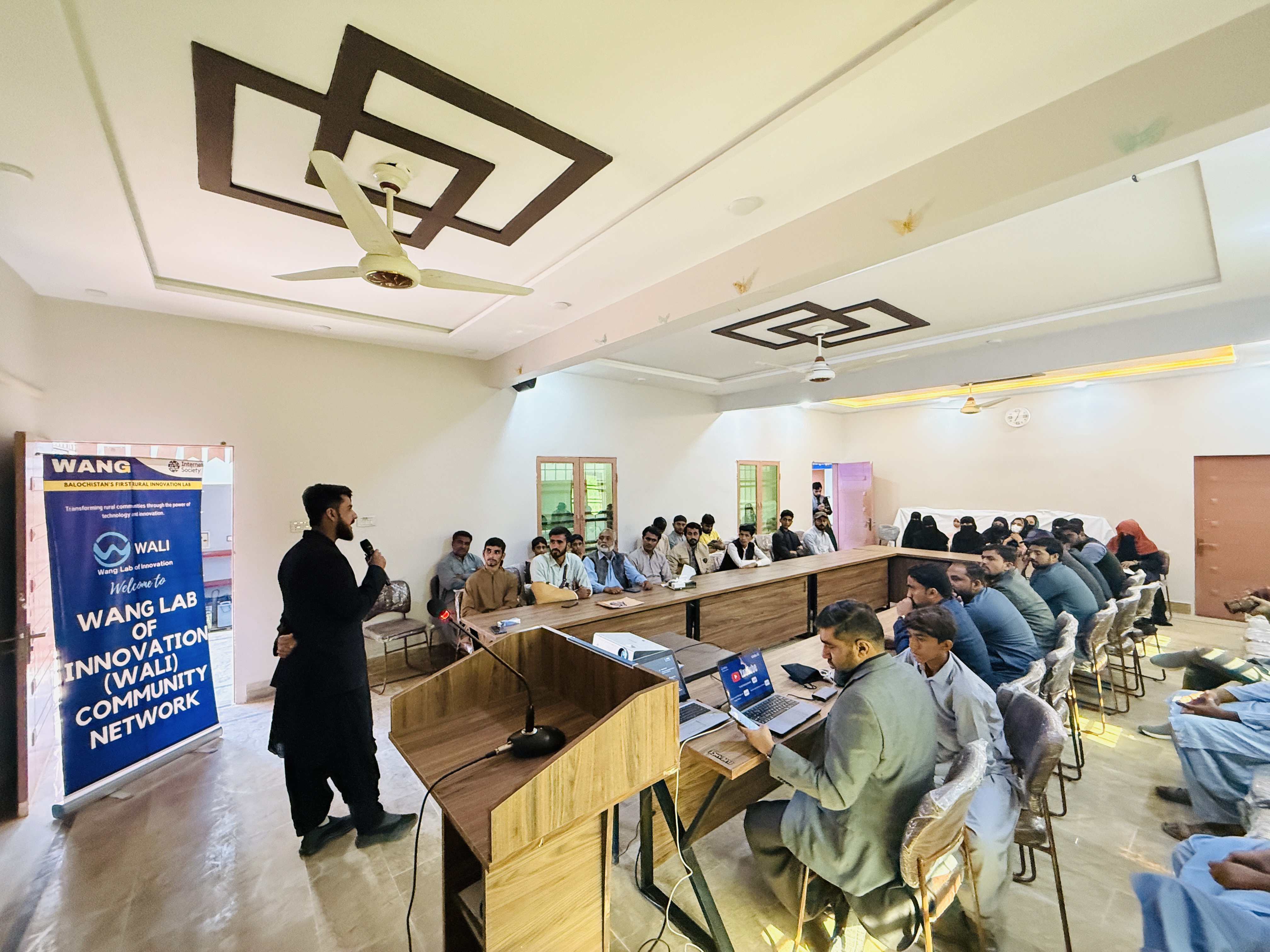
WALI's mission
WALI creates meaningful learning environments so people in underserved communities can use technology and innovation to address local challenges, build livelihoods, and participate in the wider world without leaving their communities behind.
Our story
The education crisis during COVID-19 exposed how impossible a successful future becomes when digital literacy and reliable internet are missing.
Thousands of students in Balochistan were locked out of online classes because they lacked both digital skills and reliable internet access. That gap is one of the reasons WALI exists.
The divide affects agriculture, livelihoods, social inclusion, and the ability of communities to participate in the digital world on fair terms.
Building in Bela keeps the lab close to real community conditions instead of designing from a distance and hoping the work translates later.
WALI grows through programs, partner stories, public videos, impact records, and initiatives that share the work beyond Lasbela.
How it works
WALI combines a community-rooted lab with consultancy, training, and on-ground implementation support for partners, firms, and public-interest initiatives.
WALI has dedicated programme delivery, partner coordination, training services, and field execution capacity, strengthened by WANG's community relationships and programme experience.
WALI provides the place and the practical approach: practical training, experimentation, local visibility, and initiative incubation close to the ground.
The lab provides consultancy services, including digital training, in-person training, soft-skills sessions, and practical support for organizations working in rural and low-access communities.
WALI can manage on-ground activities for different firms and partners, including community mobilization, training logistics, field coordination, documentation, and local implementation support.
The clearest starting point is still digital literacy. See Digital Literacy in Pakistan for how WALI documents its rural approach through curriculum, yearly outcomes, and public evidence.
Next pages
The best way to understand WALI is to explore the programs, impact, initiatives, and team.