
Simple Urdu instruction
AI concepts are translated into clear, practical language so learners do not need advanced English to participate.
Initiative overview
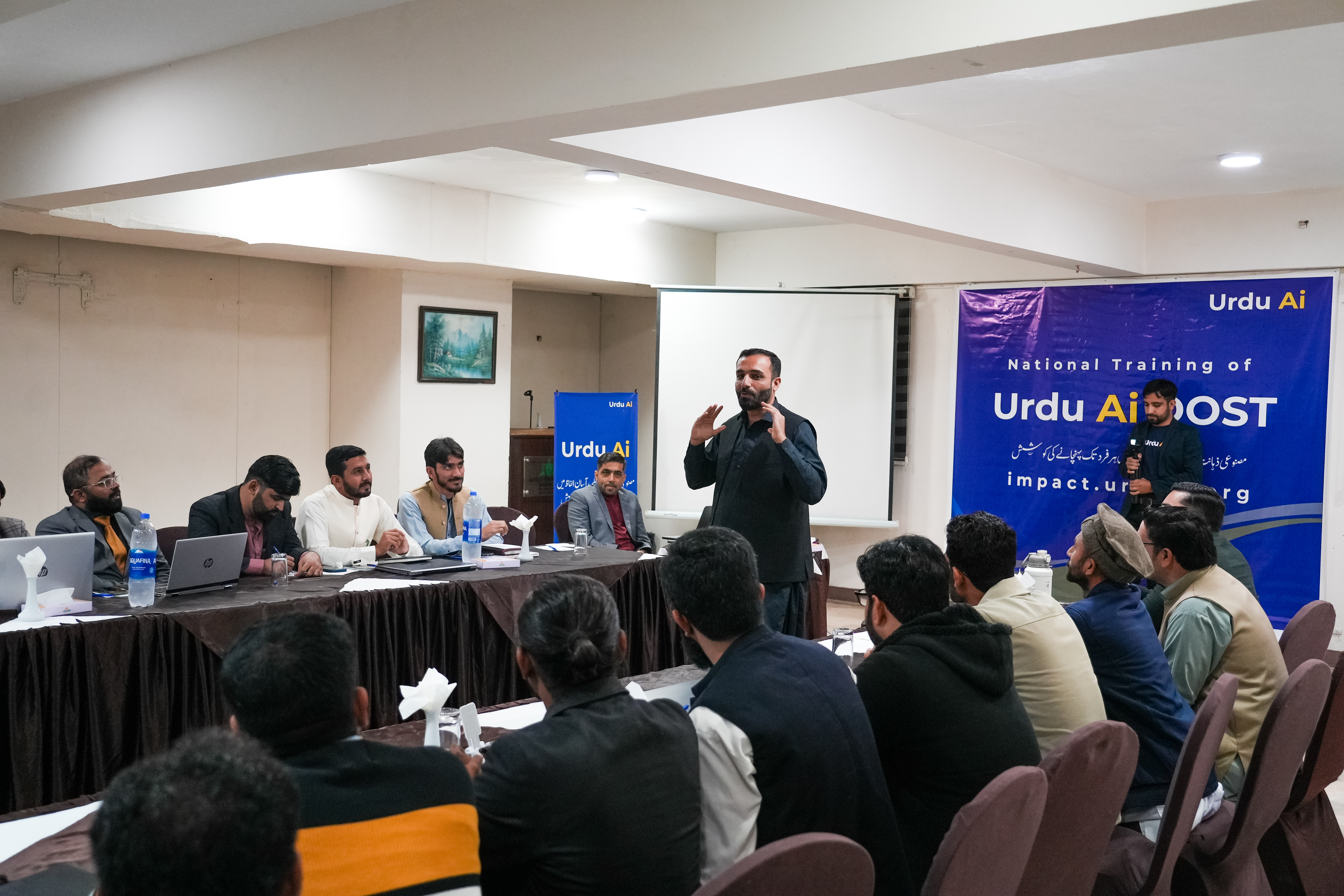
It exists because the future of technology should not be gated by English. Through courses, workshops, and a facilitator network, Urdu AI makes AI learning usable for first-time learners, students, educators, women, and professionals across Pakistan.
Why WALI built it
The initiative began from the same rural logic that shapes the rest of WALI: if people cannot access a technology in the language they actually use, the promise of that technology remains distant. Urdu AI responds to that gap by teaching AI in practical Urdu instead of imported jargon.
How the initiative works
This is what turns the initiative from a set of workshops into a recognized national movement.
AI concepts are translated into clear, practical language so learners do not need advanced English to participate.
Local facilitators carry workshops into districts and cities, making the model relational and scalable at the same time.
The map, team, and booking flows on the Urdu AI impact site help donors, partners, and media verify operating reach.
Phase two is designed to expand the facilitator network while keeping women and underserved learners central to delivery.
Explore next
Use the AI education in Urdu page for the overview, the Dost article for facilitator detail, and the case study for ecosystem context.