
Accessible content
Urdu AI uses jargon-free language so learners can understand AI concepts without needing advanced English.
AI education in Urdu
Urdu AI exists because millions of learners in Pakistan are excluded from AI education by English-first teaching. Through WALI, Urdu AI turns artificial intelligence into simple, practical Urdu for students, women, youth, professionals, and first-time learners across Pakistan.
What Urdu AI is
The 2026 WANG organizational profile describes Urdu AI as a joint initiative of WALI and PeeL Technologies. Its role is direct: demystify AI by translating technical ideas into simple Urdu that people can use in education, work, freelancing, and daily life.
How the program scales
The strongest version of AI education in Urdu is not only a website or only a workshop series. It is a connected system with courses, community facilitators, and visible impact.
Urdu AI uses jargon-free language so learners can understand AI concepts without needing advanced English.
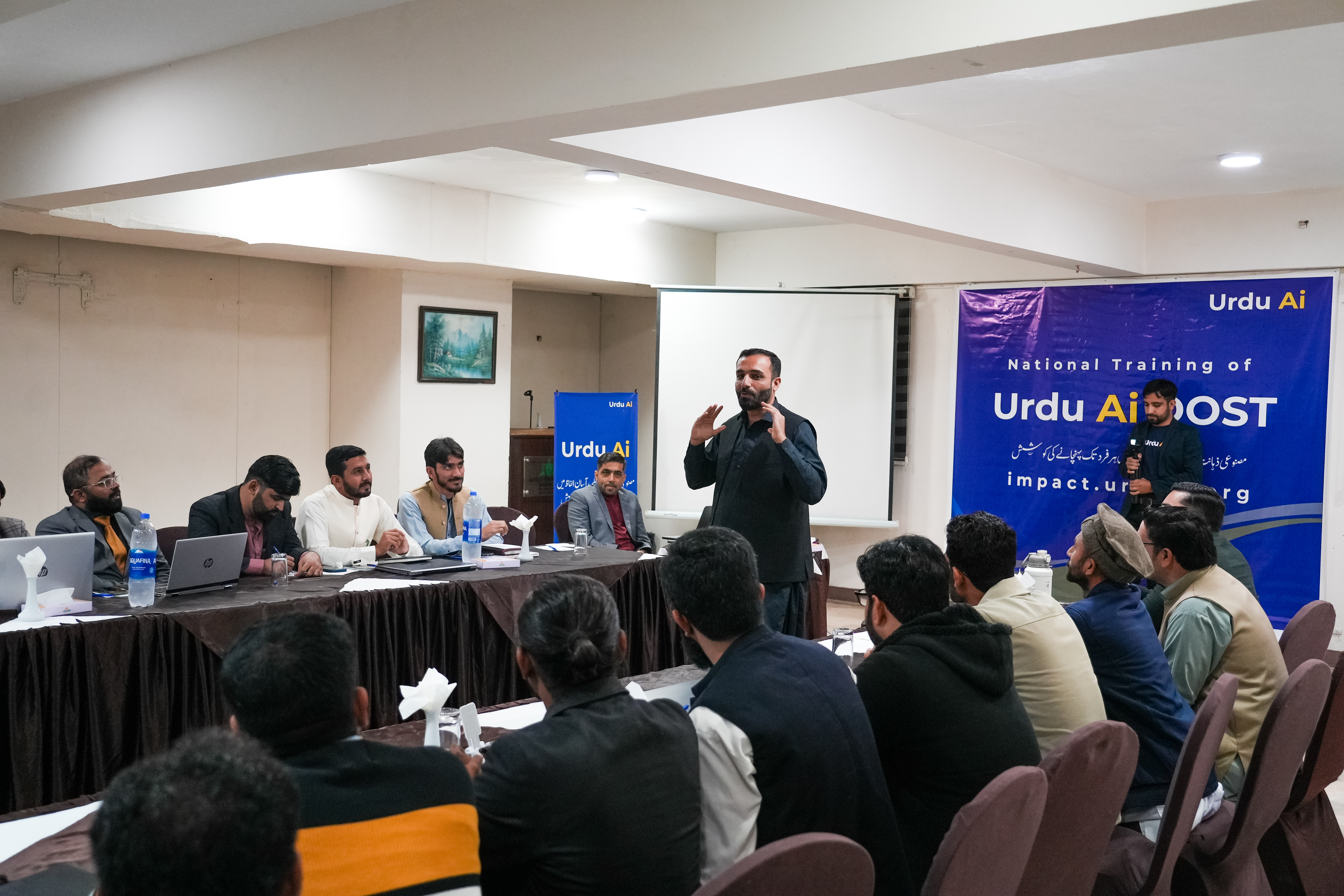
The Dost model trains local facilitators to run AI literacy workshops across districts, making the work relational instead of top-down.
The public impact site and district map make the network easier for partners, media, and institutions to verify.
Phase two is backed by AVPN's AI Opportunity Fund with a USD 250,000 grant targeting 30,000+ learners through 30 facilitators.
February 2026 rollout
The February 2026 reporting shows operating scale, not only long-term ambition.
Delivered across 30 cities in one month through the Urdu AI Dost network.
Reached in February 2026 alone through community-level AI literacy sessions.
Included in the February 2026 learner mix, making inclusion a major strength of the rollout.
The program also moved into higher education through agreements focused on faculty and student capacity building.
Explore next
The strongest internal path is to compare this overview with the initiatives hub, the deeper Urdu AI case study, and the on-the-ground Dost program article.