
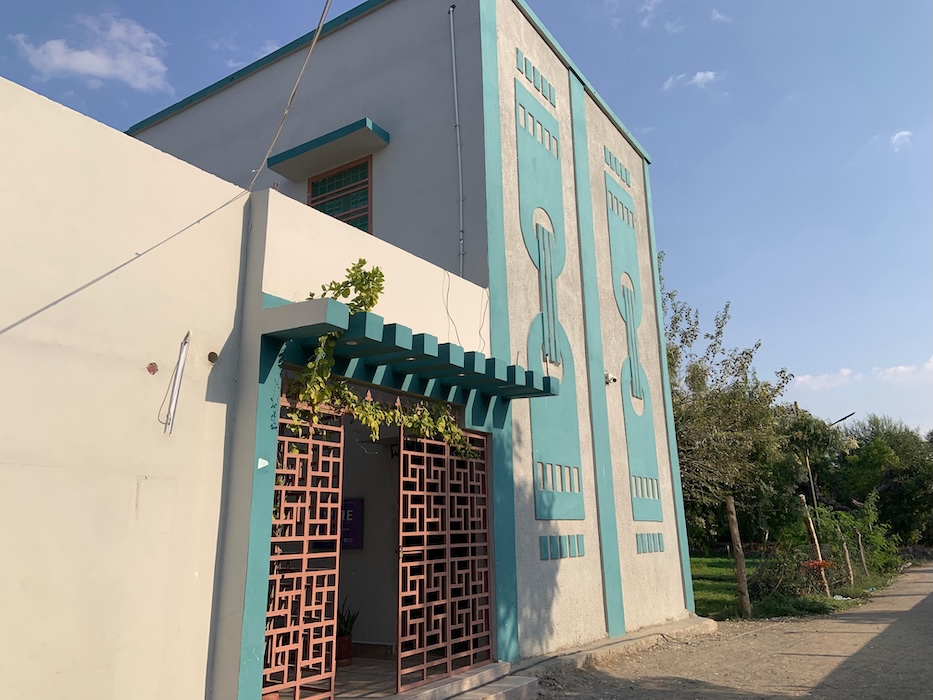
Community internet access becomes meaningful when it changes what a village can do every day. Ahmed Abad Wang is important in the WALI story because it shows how a local place can move from low access toward a functioning digital learning site with visible programs, repeated training, and stronger public opportunity.
The annual report places WALI directly in Ahmed Abad Wang and describes the lab as a solar-powered, community-led technology space with strong internet access and free learning programs. That sentence matters because it turns community internet access into something people can picture and verify.
Why the village location matters
When access is distant, participation becomes harder. Students have to travel, learners hesitate to return, and the experience of technology stays fragile. When access is local, the barriers shift. People can return, confidence can build, and programs can become part of community life instead of one-time interventions.
That is what makes Ahmed Abad Wang such an important anchor in the WALI story. It is not only the place where WALI is located. It is the place that explains why the model works the way it does.
What access enables once it arrives
Once internet access and a functioning lab are in place, the range of possible work expands quickly: digital literacy, Urdu AI learning, youth support, research, school-facing pathways, and community experimentation all become more realistic.
This village story gives the broader work a human scale and a real geography.
Why this place matters publicly
Community internet access here is not a theory. It is linked to an actual village, a visible building, and a working rural lab model that people can recognize and verify.
For donors and collaborators, it also answers a deeper question: where is this work rooted? In WALI’s case, the answer is not abstract. It is Ahmed Abad Wang.