
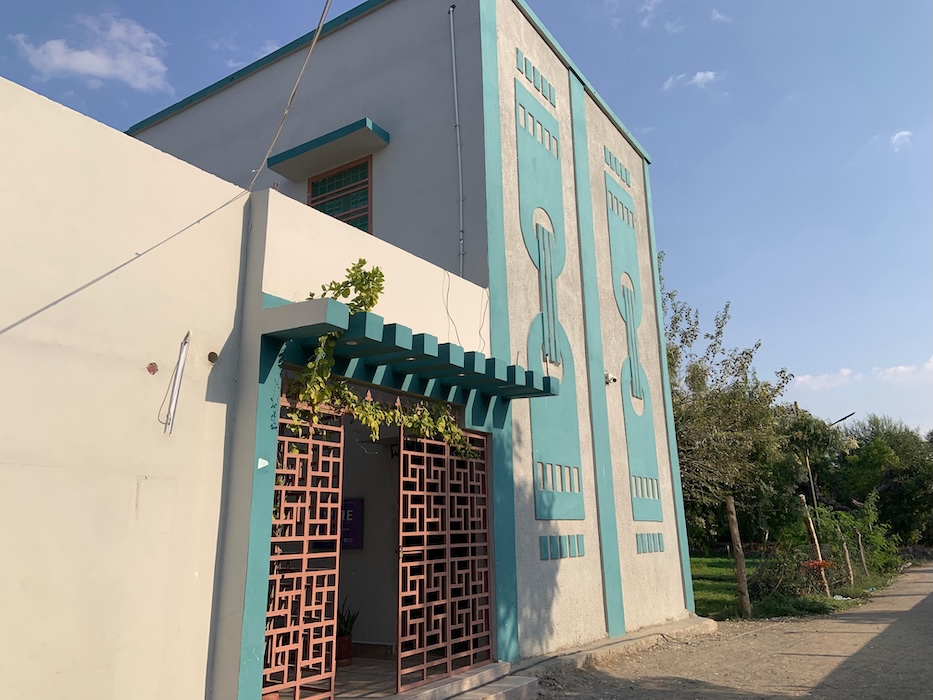
WALI makes the strongest sense when it is understood as a response to local constraints. The lab is rooted in Ahmed Abad Wang, Bela, in Lasbela, Balochistan. That matters because the needs it is addressing are local: limited digital access, long distances to opportunities, uneven learning infrastructure, and the need for safe, nearby spaces where girls and youth can build confidence with technology.
According to WALI's Annual Report 2025, the institution is listed as founded in 2021. The report says the lab opened in October 2022 as a solar-powered, community-led technology site with strong internet access and free learning programs. That sequence is important. It shows that the lab was built around both access and continuity.
Why place matters
Too many innovation stories describe scale before they describe place. WALI works the other way around. Its value comes from beginning in one specific village context and building programs that respond to local needs before they grow into wider initiatives.
The 2026 WANG organizational profile describes WALI as a year-round rural learning and innovation hub for children, youth, women, and farmers. The profile also notes daily digital camps serving around 40 students across two sessions. That operating rhythm is what gives the lab substance—and makes its ideas useful beyond one community.
How the model expanded
Once the lab was active, WALI became more than a room with computers. It became a working center for multiple programs. Digital literacy programs built first-contact confidence. Urdu AI made emerging technology easier to understand in local language. WIRE linked women's innovation to livelihoods. PakSpeed, PakEducate, and Darwaza extended the lab's logic into systems, infrastructure, and service access.
This is why the ecosystem matters. WANG provides the nonprofit foundation and community trust. WALI becomes the place where learning, experimentation, and delivery happen. The initiatives then scale specific problems outward.
Why this matters beyond Lasbela
WALI becomes nationally relevant not by pretending to be everywhere at once, but by showing that serious innovation can start in a rural community and still produce visible programs, credible partnerships, and public-interest systems. That is a story partners, journalists, and public institutions can understand when the documentation is strong enough.