
Women-led enterprise
WIRE is documented as a women-led social enterprise, not only a skills or awareness program.
Women digital skills in Pakistan
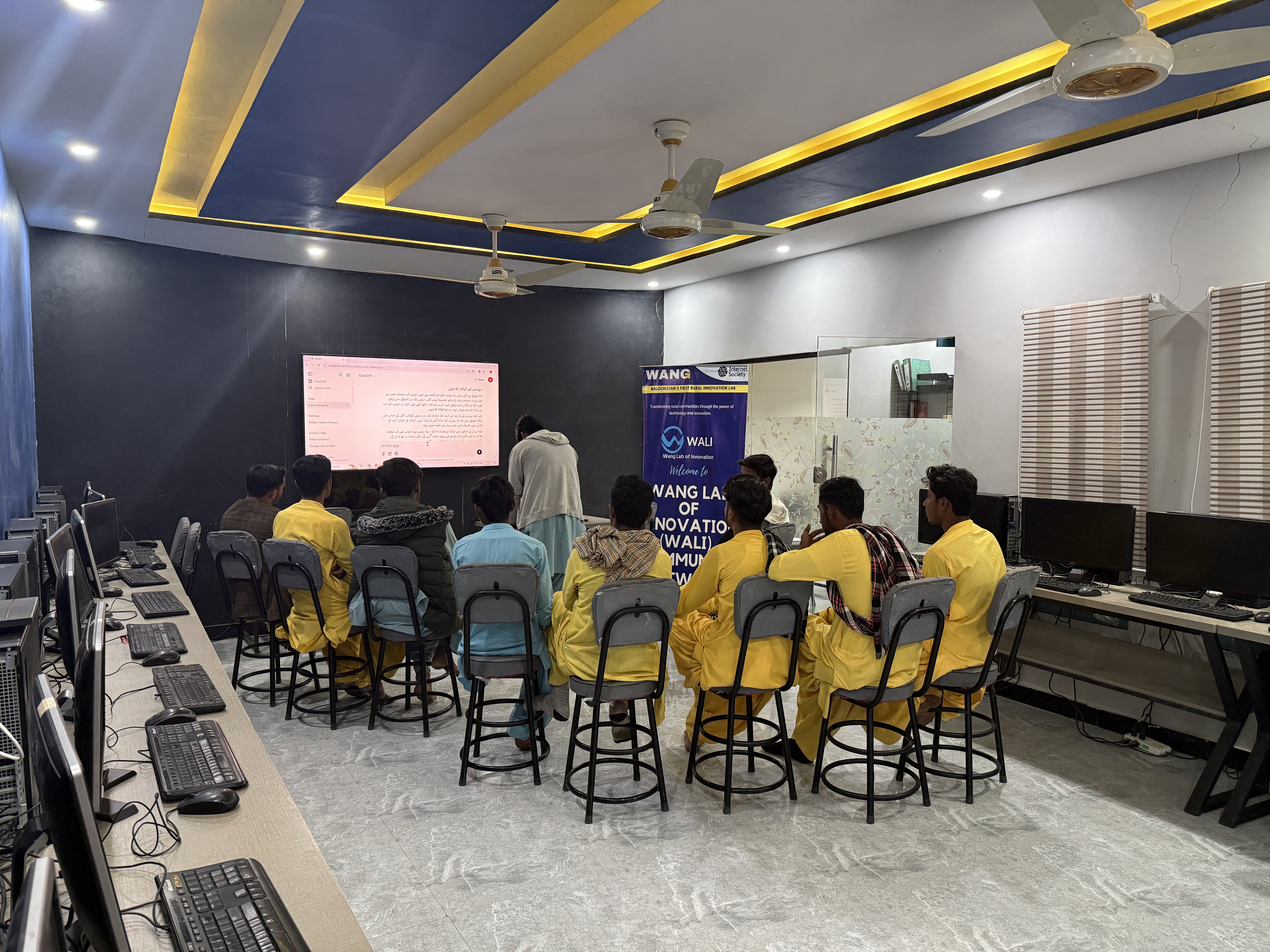
WIRE and WALI approach women’s digital skills in Pakistan through a rural model rooted in Lasbela. The work is not only about teaching technology. It links digital confidence, production, enterprise, and girls’ continuity in one visible local system.
Why this matters
The WIRE model is built around that reality. It connects women’s work, girls’ futures, and rural innovation through a mother-daughter resilience approach. The goal is not only digital access. The goal is lasting agency.
What WIRE adds
That is what sets this apart from generic “women in tech” language. It is grounded in documented local outputs.
WIRE is documented as a women-led social enterprise, not only a skills or awareness program.
400 school uniforms were stitched and delivered in 2025, creating an immediate economic link between rural women and institutional demand.
The mother-daughter model links women’s income to stronger chances that girls stay in school and remain connected to opportunity.
Two artisans passed UNICEF-supported assessments and were hired as government school teachers, showing mobility beyond one training cycle.
Why specificity matters
WALI's strength is writing from Lasbela with facts, outcomes, and real initiatives instead of only broad national language.
This work is anchored in Ahmed Abad Wang, Bela, Lasbela, Balochistan rather than abstract national messaging.
Women’s digital skills become more durable when they connect to production, jobs, and local income pathways.
The WIRE case study provides the deeper institutional explanation behind the public claims.
Readers can move into initiatives, impact, and the full set of case studies.
Explore next
The best follow-on pages are the WIRE case study, the initiative portfolio, and the impact page where the wider ecosystem record is more visible.