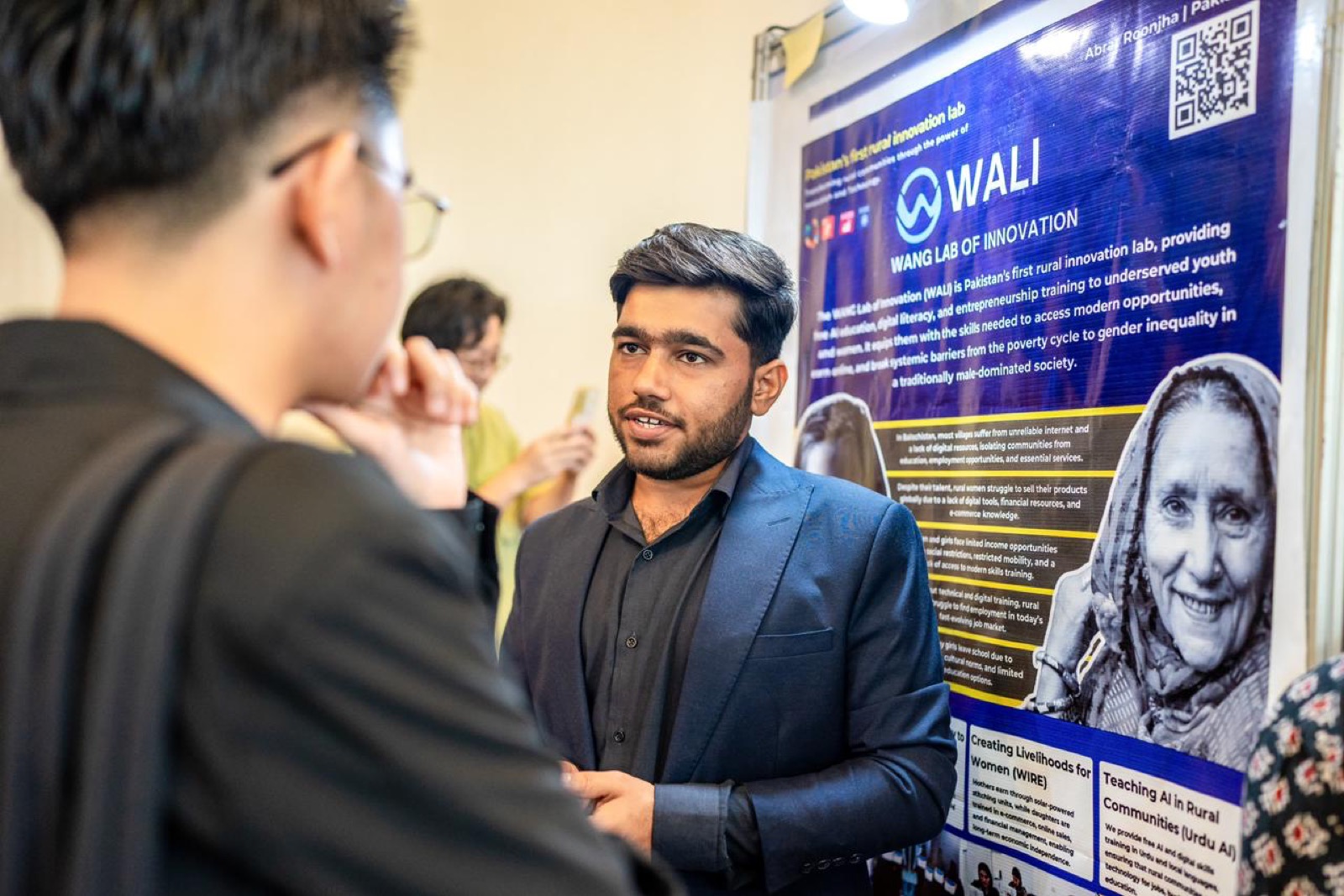
WALI's story is not only about teaching digital skills. It is also about building the conditions that make digital learning usable in the first place. In rural settings, that usually starts with infrastructure: power, connectivity, and a place where people can return often enough for confidence to become durable.
The 2025 annual report says WALI opened in October 2022 as a solar-powered, community-led technology lab with strong internet access and free learning programs. That description matters because it shows the lab was designed as more than a classroom. It was designed as a functioning local node for opportunity.
Why this partnership matters structurally
Internet Society appears in the wider WANG institutional record as part of the support base behind WALI Lab of Innovation. The 2026 organizational profile lists Internet Society and SSGC support since 2021, with more than PKR 8.7 million attached to the lab's development and continuity.
For donors and public institutions, that does two things at once. First, it shows that external partners were willing to back the lab early. Second, it helps explain how WALI could operate as a year-round site rather than a one-off project.
From infrastructure to learning capacity
Once a rural site has reliable power and internet, it can do more than host short workshops. It can support recurring digital literacy classes, AI awareness sessions, youth resource work, school-facing services, and data collection. WALI's current program record fits that pattern. The 2025 annual report documents 196 learners completing the core digital literacy program and six AI workshops delivered during the year.
That is the deeper value of the connectivity infrastructure. It does not sit beside the mission. It enables the mission.
Why sustained connectivity matters
Many community technology projects struggle because they have compelling stories but weak operating conditions. WALI's advantage is that its public record shows both: a community-rooted mission and the infrastructure support that made repeated delivery possible. The infrastructure story and the community story reinforce each other.