
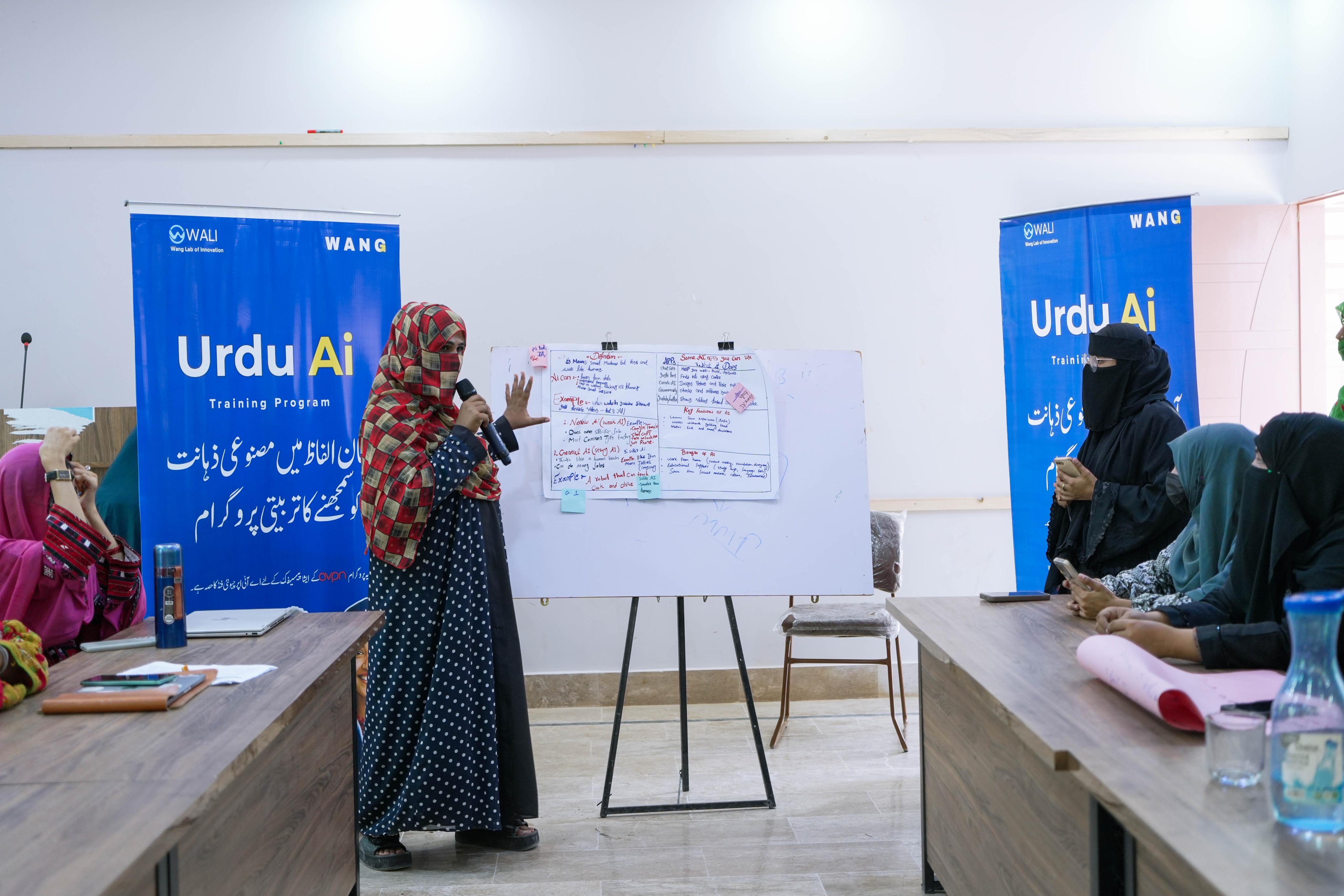
WIRE’s strongest idea is not simply that women should participate in innovation. It is that rural innovation becomes more powerful when women’s earnings and girls’ futures are linked inside the same design. That is why the mother-daughter model matters. It explains the mechanism behind the public story.
The WANG organizational profile describes WIRE as a women-led social enterprise rooted in a mother-daughter resilience logic. It frames the model as a move away from charity and toward sustainable economic development. That matters because it gives WALI’s ecosystem a women-centered pathway with actual clear structure behind it.
Why the model is stronger than generic empowerment language
Many women-focused projects stop at training. WIRE pushes further into production, income, and continuity. The profile records 400 school uniforms stitched and delivered in 2025, more than PKR 120,000 directed to rural women, and PKR 8.57 million in social enterprise income for FY 2024–25. Those are not symbolic outputs.
They show why WIRE matters inside a rural innovation story. The initiative is using skills, production, and enterprise to reshape what opportunity looks like in the community.
Where daughters enter the picture
The mother-daughter framing matters because it expands the definition of outcome. Income is not only income. It also affects whether girls can remain in school and whether educational continuity becomes more realistic in households under pressure. That makes WIRE relevant not only to livelihoods funders but also to donors interested in girls’ education and social inclusion.
This is also why the WIRE story works well next to WALI’s girls’ digital literacy and initiative overview. One page shows the learning environment. The other shows how household economics can help sustain it.
Why this model matters
Specific stories make WIRE’s impact easier to understand. Here, the model is named, linked to documented outputs, and tied to actual figures rather than slogans.
It also strengthens WALI’s claim that rural innovation is not one theme. It includes language access, infrastructure, school systems, and women’s enterprise all at once.