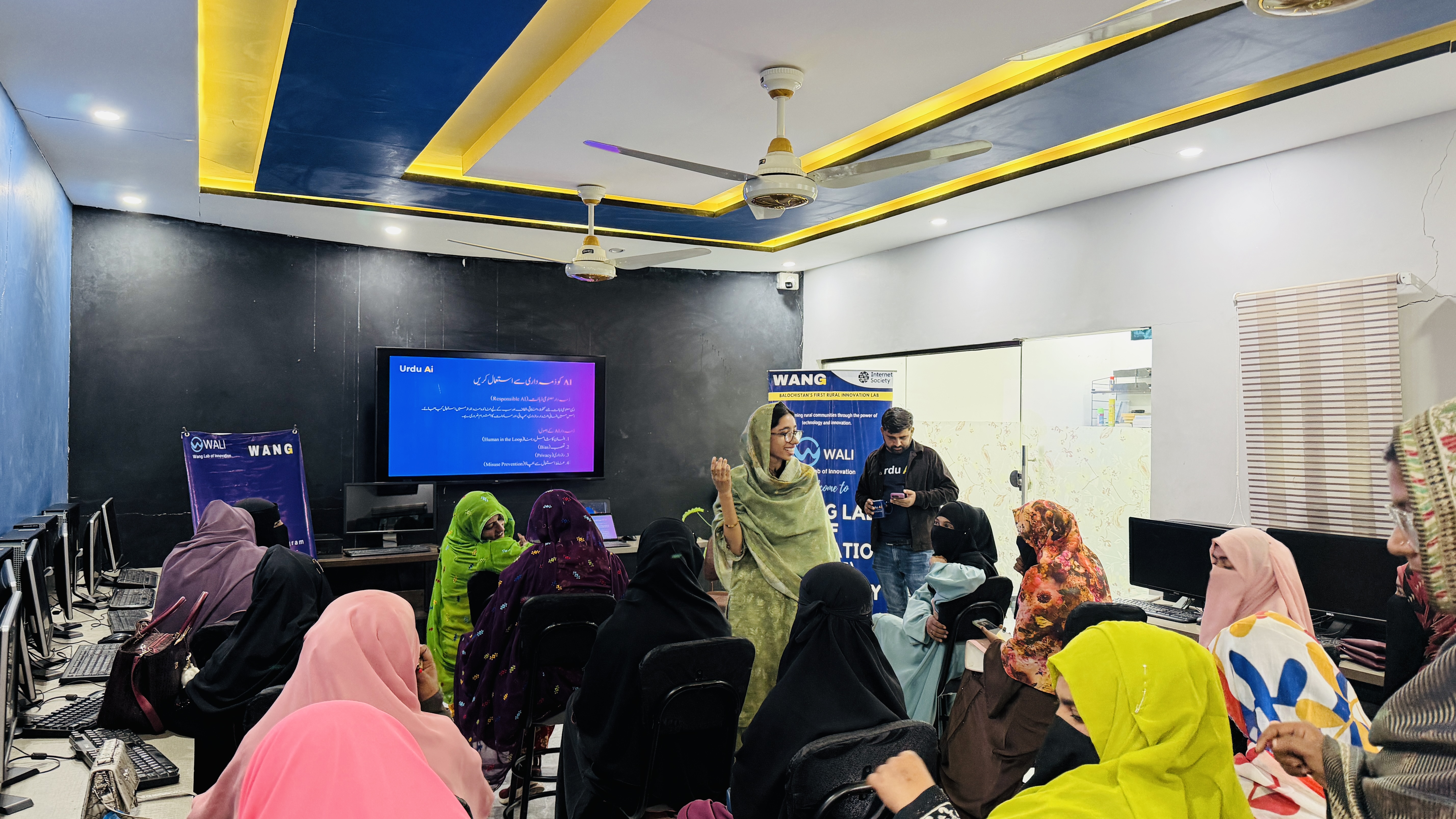
One of the clearest ways to understand WALI is through its digital literacy program. The 2025 annual report describes it as a three-month training program designed to build strong foundational digital skills through practical, hands-on learning.
That matters because digital literacy in rural communities is not only about exposure. It is about repetition, confidence, and enough guided practice that learners can use technology in school, work, communication, and daily problem-solving.
What the curriculum covered
The annual report lists a curriculum that starts with basics and moves toward useful everyday capability. Learners were trained in computer basics, typing practice, Microsoft Office, internet research, digital safety, email writing, Google applications, AI tools, and graphic design using Canva.
That curriculum is strong because it does not stop at abstract introduction. It combines first-contact access with the tools that people are likely to encounter again in study, jobs, freelancing, and administrative tasks.
Who completed the program
According to the 2025 report, 196 learners completed the program during the year. Of those, 108 were female and 88 were male. The report explicitly highlights strong participation by female learners as a sign of WALI's continued commitment to improving women's access to digital education in rural communities.
The report also notes that all participants completed the full course duration and showed noticeable improvement in awareness, confidence, and practical skills. That kind of completion data gives the program credibility beyond promotional language.
Recognition and confidence building
WALI followed the training cycle with a certificate distribution ceremony, which gave learners a chance to share their experience and reflect on how the program affected their development. That matters because recognition is part of the learning model. It helps move students from passive participation into visible achievement.
For WALI, this program is more than a class. It is the core access pathway that makes the rest of the lab possible. Once a learner becomes comfortable with a keyboard, the internet, email, and digital tools, newer pathways like Urdu AI, school systems, entrepreneurship, and research support become much more realistic.